GRASP
HDR conversations - Connecting lived experience and research with Shadika Shathi
October 21st, 2026, by
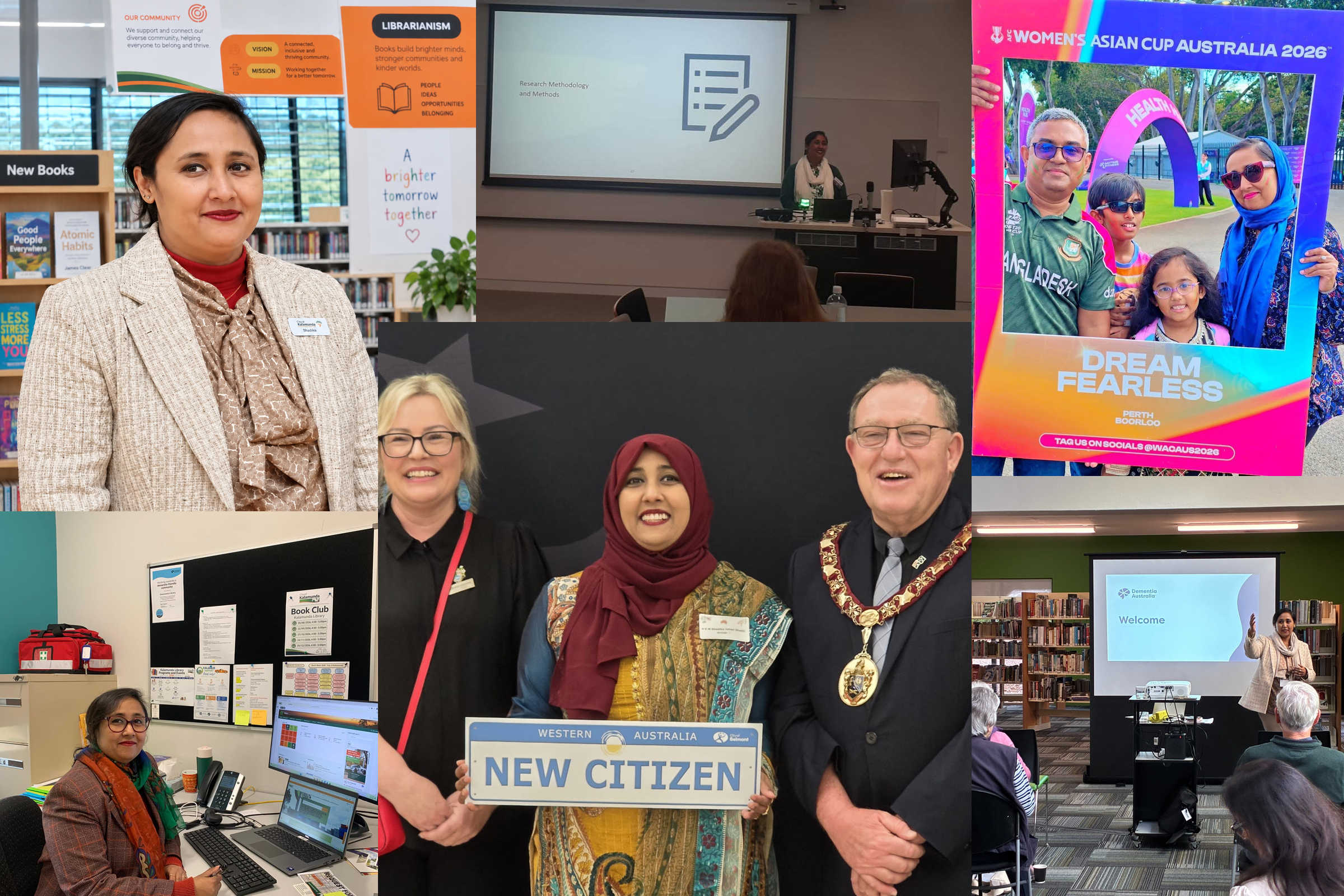
Our personal and professional experiences can shape not only the research questions we ask, but also how we approach them. In this conversation, Shadika Shathi shares how her experiences as a skilled immigrant and her work in public libraries came together to inspire the direction of her PhD research.
She reflects on the motivation that comes from researching a topic with personal and professional significance, while also discussing how her research has challenged her to look beyond her own experiences and remain open to different perspectives.
Shadika, can you tell us a little about your research and what motivated you to begin your PhD?
My research explores how skilled immigrants find, access and use information while settling in Australia. It examines how their information-seeking behaviour changes across different stages of settlement, from the early period of adjustment to becoming more established and confident in navigating everyday life, and how public libraries can support them throughout that journey.
The study has two connected phases. In the first phase, I am conducting interviews with skilled immigrants to understand their settlement-related information experiences. In the second phase, I will explore public libraries’ perspectives on responding to their needs.
My motivation comes from my own experience of arriving in Australia as a skilled immigrant. Navigating employment, education, housing, healthcare and government services showed me the importance of having timely, relevant information when building a life in a new country.
My professional experience in libraries also led me to view settlement from another perspective. Public libraries are often among the most accessible and welcoming places in a community, where people can find information, technology, services, programmes and opportunities to connect with others.
As I explored the topic further, I found that there was limited research in Australia focusing specifically on the information-seeking experiences of skilled immigrants and how public libraries might support them. That gap gave me a strong reason to investigate the area more closely.
Over time, my personal settlement experience and professional work in libraries came together and shaped the direction of my research. I saw an opportunity to explore how libraries could help skilled immigrants access the information they need as they build their lives in Australia.
What has it been like undertaking a PhD that is informed by both your professional and personal experiences?
It has made the research feel closely connected to my life, but it has also challenged me to look beyond my own experience. Having a connection to the topic is a useful starting point, but there is still so much for me to learn.
That has become especially clear through the interviews. Some experiences feel familiar, while others introduce me to situations I had never considered. Hearing how people’s professions, cultural backgrounds and family circumstances influence their settlement journeys has broadened my understanding.
It has also made me more aware of how I listen and ask questions. I might relate to something a participant says, but I need to give them room to explain what it means to them. I am learning to reflect on my assumptions and let their accounts guide my understanding.
As a librarian, I often find myself thinking about what these experiences could mean for everyday services. The research has encouraged me to pause, listen and understand people’s needs before considering how a library might respond. That is something I can carry into both my research and my professional work.
Have there been highlights or things you have found particularly rewarding so far?
One of the biggest highlights has been the trust participants have placed in me. They have shared the challenges they faced, the decisions they made and the achievements that matter to them. I feel privileged to hear these stories, and their willingness to contribute reminds me why the research matters.
I have also enjoyed learning through the practical work of research, particularly conducting interviews and using NVivo to organise and explore the data. I am becoming more confident, but I am also learning to be patient and accept that I will not always have an answer straight away.
The support around me has made a real difference. My supervisors, Curtin University Library, academic skills advisers and fellow researchers have helped me work through challenges and notice the progress I have made.
It is rewarding to see a question that began with my own experience gradually develop into a study shaped by many people’s perspectives.
What advice would you give to other students, particularly those whose research is informed by their professional or personal experiences?
I would encourage students to value the experiences that led them to their research. Questions arising from personal or professional life can provide a meaningful starting point and help sustain motivation when the work becomes challenging.
At the same time, be open to having your understanding challenged. Familiarity with a topic does not mean you know how others experience it. Reflect on your assumptions, listen carefully and allow different perspectives to shape your thinking.
Seek support early. Conversations with supervisors, research training and guidance from academic skills advisers can help you develop your skills and confidence. You do not need to know everything at the beginning.
Stay connected to what motivated you, while giving your ideas room to develop. Be patient with yourself and recognise the smaller achievements along the way. Working through a difficult idea, learning a new skill or finding a clearer way to explain something all counts as progress.
Please make any anonymous comments/ feedback, or suggestions for further posts at this link. If you would like to get in touch, write a post for the Ideas Hub blog or be interviewed for our conversation series, please email karen.miller@curtin.edu.au. Contributions from HDR students are welcome!
Photos supplied