GRASP
HDR conversations - Staying connected from afar with Michelle Vokal
July 14th, 2026, by
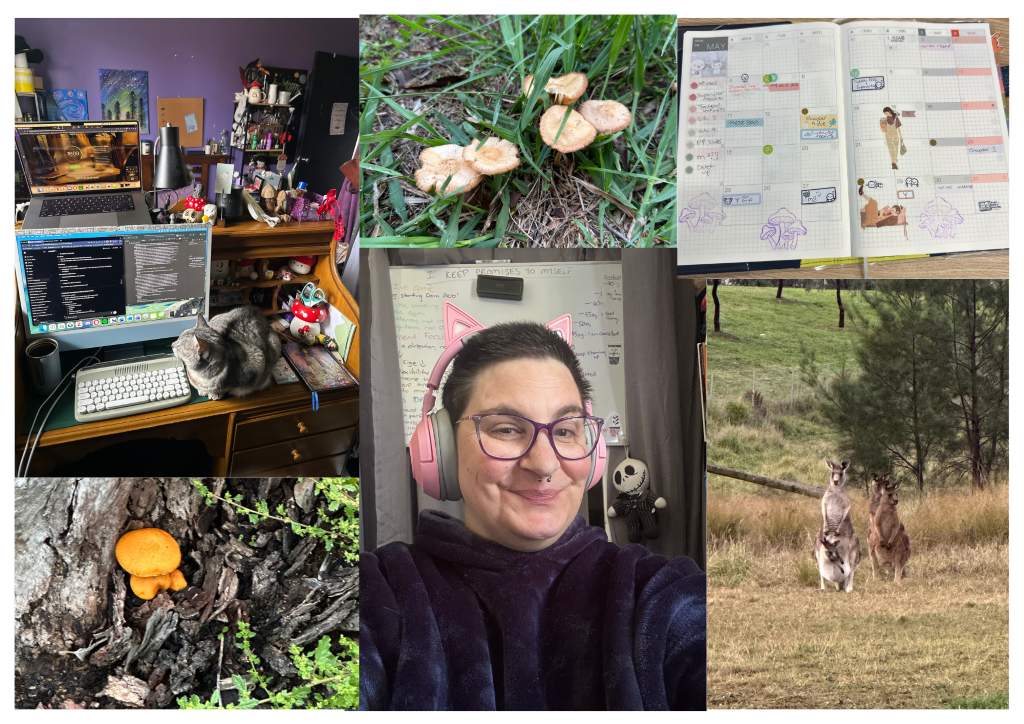
Doing an HDR degree from a distant location can be quite different to living near campus. In this conversation, our second in an ongoing series where students share the stories behind their research journeys, Michelle Vokal shares her experience studying for her MPhil while based in Canberra.
Michelle reflects on what drew her to Curtin University, the unexpected path that led her from Honours to an MPhil, and the rewards of writing alongside research. She also discusses the particular challenges of studying remotely, and the intentional strategies, from SUAW sessions to regular supervisor contact, that have helped her build connection and structure into her HDR journey.
Michelle, can you tell us a little about your research and what inspired you to pursue a Masters of Philosophy?
I’m doing a Master of Philosophy as a creative-led researcher, which means I’m writing a novella alongside an exegesis. My thesis examines how writers of romantic fiction normalise and romanticise coercive control in abusive and toxic relationships, for example, looking at Sarah J. Maas and the character Rhysand in A Court of Mist and Fury. What led me to pursue a Master of Philosophy was that, after Honours, I received an upper second-class mark, and the university invited me to expand my Honours project into a Master’s by Research. However, because I’d completed a novella rather than a Fine Arts Honours, I found out I wasn’t eligible for that conversion pathway. I was initially planning to go straight into a PhD, but my supervisor suggested I apply for the Master of Philosophy instead, with her continuing as my supervisor and the possibility of converting to a PhD later, which ultimately didn’t happen.
What made you choose to pursue your HDR at a university based in a different state?
I chose Curtin because it offered two majors: a BA in Professional Writing and Publishing, and Creative Writing, which Canberra didn’t have at the time and still doesn’t. They have Creative Writing, but not the publishing side. In my final BA class, I took a unit called “Creative Writing Supervised,” which naturally led into Honours with the same professor as my supervisor. From there, it became a bit of a snowball effect, and I’ve stayed at Curtin ever since. Now that I’m nearing completion of my MPhil, I’m noticing that something as significant as a PhD really does benefit from a face-to-face feel, since many opportunities like psych groups, write-ups, and events are in-person only. Attending an online event and watching everyone else eat pizza or enjoy free tea and coffee can feel a little isolating at times. That said, I’m incredibly grateful for events like Bootcamps that send out care packages to remote students. I’m forever grateful for that block of dark chocolate salted caramel and the stickers!
How do you stay connected with your supervisor(s) and student colleagues while studying online?
Connection is a huge factor for me. I actively participate in SUAW (Shut Up and Work) sessions and Bootcamps (intensive thesis-writing days), and I’m a member of an accountability chat group on Teams. I meet with my supervisors monthly and keep up regular email correspondence with them in between. When I’m able to, I attend any events with an online component, such as the recent Thesis Fest.
Have there been highlights or things you have found particularly rewarding so far?
The highlights for me have mainly been meeting new friends through SUAW. I’ve been attending for a year now and recently started facilitating the sessions myself, which has been really rewarding. Writing the novella has also been a highlight; it’s been challenging, but extremely rewarding to work on. Another highlight is that the MPhil has been a great preparation for the PhD ahead.
What’s been the biggest challenge of doing your degree remotely, and how have you adapted to it?
The biggest challenge has probably been not having easy access to the practical, everyday resources that come with being on campus, things like library access, printing, workshop spaces, or just being able to walk into your supervisor’s office with a quick question. On top of that, feedback on creative work lands differently online. Getting written comments on a chapter isn’t quite the same as sitting down and talking through it in person, where you can pick up on tone and ask follow-up questions in real time.
The way I’ve adapted has mostly been about being intentional rather than passive. I’ve had to actively build my own sense of structure and community rather than relying on it to happen naturally, which led me to things like SUAW sessions, Bootcamps, and my accountability chat group. I’ve also learned to be more proactive with feedback, asking clarifying questions over email or booking a call rather than just sitting with written comments and guessing at what my supervisor meant.
I think the other part of adapting has just been shifting my mindset. Rather than seeing remote study as something lesser, I’ve tried to lean into the flexibility it offers, while still making a real effort to seek out connection wherever I can.
What advice would you give to other students, particularly those studying from locations outside Perth?
My biggest piece of advice is to build your own structure and actively seek out connections, rather than waiting for them to come to you. When you’re not on campus, you don’t get that natural rhythm of bumping into people or absorbing community just by being physically present, so you have to be a bit more intentional about it.
I’d also really encourage students to stay in regular contact with their supervisors, even more so than you might if you were on campus. It’s easy for communication to lapse when you’re not seeing someone in person, so I’ve found that having monthly meetings plus regular email correspondence in between makes a real difference.
Another piece of advice is to ask questions and follow up on eligibility details directly with the university, rather than making assumptions. I found this out the hard way with the Honours-to-Master’s conversion pathway, where I assumed I’d be eligible, but I wasn’t. It’s worth checking these things early rather than being caught out.
Finally, I’d say don’t be afraid to put yourself forward and eventually take on leadership within these communities, whether that’s a study group, a committee, or something similar. Stepping up rather than just being a passive attendee is a really rewarding way to deepen your connection to the community, rather than just being on the receiving end.
Please make any anonymous comments/ feedback, or suggestions for further posts at this link. If you would like to get in touch, write a post for the Ideas Hub blog or be interviewed for our conversation series, please email karen.miller@curtin.edu.au. Contributions from HDR students are welcome!
Photos supplied